Texas Guns Firearms Education
What Makes a Firearm an SBR? Pistols, AOWs, Vertical Grips and Machine-Gun Law Explained
The 16-inch barrel rule is only the beginning. Federal classification also turns on shoulder-fired design, overall length, original configuration, attached components and two separate statutes—the NFA and the Gun Control Act.

The short answer: what makes a firearm an SBR?
Under the National Firearms Act, a rifle is generally a weapon designed or redesigned, made or remade, and intended to be fired from the shoulder. A rifle is an NFA-regulated short-barreled rifle, or SBR, when it has a barrel under 16 inches. A weapon made from a rifle is also covered when, as modified, it has a barrel under 16 inches or an overall length under 26 inches.
That means barrel length alone does not classify every compact firearm. A firearm originally configured and designed as a pistol may remain a pistol without a shoulder stock, while a firearm originally produced only as a rifle can remain a “weapon made from a rifle” after being shortened. Actual design and configuration—not the nickname on a sales tag—control.
Is every barrel under 16 inches an SBR?
No. The firearm must first be a rifle or a weapon made from a rifle. A conventional pistol is not automatically an SBR because its barrel is short.
Can a pistol have a vertical foregrip?
Do not assume so. ATF has long treated adding a vertical foregrip to a conventional concealable handgun as making an AOW. Configuration and size matter.
Would NFA repeal make SBRs ordinary rifles?
Not by itself. The Gun Control Act separately defines and restricts SBRs, and state law would remain unless separately changed.
Would NFA repeal legalize new machineguns?
No. The independent 18 U.S.C. § 922(o) restriction on post-May 19, 1986 machineguns would remain unless Congress changed it.
Start with the definitions—not the firearm's nickname
“AR pistol,” “short rifle,” “braced pistol,” “firearm” and “AOW” are often used as if they describe obvious physical categories. Federal law is less intuitive. It classifies a weapon by statutory definitions, design, original manufacture, actual configuration and sometimes its dimensions.
Rifle
The NFA definition focuses on a weapon designed or redesigned, made or remade, and intended to be fired from the shoulder, using a fixed cartridge to fire one projectile through a rifled bore for each single pull of the trigger.
Short-barreled rifle
A rifle with a barrel under 16 inches, or a weapon made from a rifle that is under 26 inches overall or has a barrel under 16 inches. The NFA and GCA both use this category.
Handgun or pistol
The GCA defines a handgun around a firearm with a short stock designed to be held and fired with one hand. ATF regulations separately define “pistol.” Neither term simply means “any gun with a short barrel.”
Any other weapon
AOW is an NFA term of art for specified concealable or unusual firearms. It is a defined category—not a casual label for every firearm that does not look like a rifle, pistol or shotgun.
A stock, brace label, marketing, dimensions and the weapon's objective design can all be relevant.
A receiver first assembled as a pistol is not treated exactly like a firearm produced only as a rifle.
The key federal rifle reference lines are 16 inches for the barrel and 26 inches overall.
A second vertical grip, smooth bore or disguised form may point to a different statutory category.
No single card can provide a final classification for every firearm. Factory records, receiver markings, design history and a formal ATF classification can matter when the facts are disputed.
What exactly makes a rifle an SBR?
Two related NFA clauses do most of the work. Section 5845(a)(3) covers a rifle having a barrel or barrels of less than 16 inches. Section 5845(a)(4) covers a weapon made from a rifle when the modified weapon has an overall length of less than 26 inches or a barrel of less than 16 inches.
Rifle barrel reference line
“Less than 16 inches” is the NFA threshold. A barrel that is exactly 16 inches is not under that clause, although overall length and other classification facts still matter.
Weapon-made-from-a-rifle reference line
A modified rifle under 26 inches overall falls within the clause even if its barrel is not under 16 inches. Either measurement can trigger the definition.
How federal barrel length is generally measured
Federal measurement is generally taken from the closed bolt or breech face to the end of the barrel. A removable muzzle device ordinarily does not add to barrel length; a qualifying permanently attached device may. Overall-length measurement has its own rules and can become especially contentious with folding, telescoping or brace-equipped designs. Use the manufacturer's documented specifications or a qualified measurement—not a tape-measure guess from a product photo.
The word “rifle” comes before the number
A 10.5-inch barrel does not make every firearm an SBR. A conventional handgun can have a short barrel because it is not first classified as a shoulder-fired rifle. Conversely, calling a shoulder-fired firearm a “pistol” does not prevent SBR classification. Design and configuration come first; measurement follows.
Why “pistol first” and “rifle first” matter
The Supreme Court's 1992 Thompson/Center Arms decision and ATF Ruling 2011-4 explain why the original configuration matters.

A pistol can lawfully become a full-length rifle
ATF Ruling 2011-4 says a firearm originally designed and configured as a pistol may be assembled as a non-NFA rifle with a barrel of at least 16 inches and an overall length of at least 26 inches, then returned to a pistol configuration. The ruling does not authorize assembling the short barrel and shoulder stock together.
A firearm produced only as a rifle follows a different path
If a firearm was originally assembled or produced only as a rifle, turning it into a handgun-sized or short-barreled configuration can create a “weapon made from a rifle.” The slogan “once a rifle, always a rifle” is imprecise, but it points toward a real original-design distinction.
What Thompson/Center did—and did not—hold
The case involved an unassembled kit capable of lawful pistol and full-length rifle configurations, as well as an unlawful SBR configuration. A plurality found the statute ambiguous and applied the rule of lenity. It did not create a universal rule that every collection of parts is harmless. ATF's later ruling says a firearm can be “made” when parts placed in close proximity serve no useful purpose other than making an SBR or convert a complete weapon into one.
Can I put a vertical foregrip on my pistol?
The safe general answer is: do not attach one until the exact firearm has been classified. In a May 4, 2006 public letter, ATF stated that installing a vertical foregrip on a handgun means it is no longer designed to be held and fired with one hand. ATF has therefore treated the resulting concealable weapon as an NFA “any other weapon.”
A conventional concealable handgun
ATF's longstanding published position is that adding a second vertical handgrip changes its design and makes an AOW. NFA classification and enforcement policy are separate questions. Consult the current guidance linked above before relying on this classification discussion for a particular transaction.
A firearm 26 inches or longer
Some larger, originally non-rifle configurations may fall outside the AOW concealability clause. But 26 inches is not a universal permission slip: measurement method, original design, actual concealability, state law and other features still matter.
Vertical versus angled
ATF's published letter addresses a vertical foregrip. An angled hand stop or grip is not automatically the same component, but the manufacturer's product name alone does not settle how a device is actually designed or used.
The old fee figures are obsolete
The 2006 letter refers to a $200 making tax and $5 AOW transfer tax. Public Law 119-21 reduced both AOW rates to $0 on January 1, 2026. The letter remains important for classification, not current fee amounts.
This is one of the worst areas for internet shorthand. “A vertical grip always makes an AOW” is too broad; “26 inches makes it automatically legal” is also too broad. The exact host firearm, its original manufacture, the grip's design, the measurement method and controlling federal and state law all matter.
What is an AOW, or “any other weapon”?
AOW is the National Firearms Act's defined catch-all category in 26 U.S.C. § 5845(e). It includes certain weapons or devices capable of being concealed on the person and firing a shot by explosive energy. The statute specifically mentions smooth-bore pistols or revolvers designed to fire a fixed shotgun shell and certain short combination rifle-and-shotgun guns. It also contains exclusions for ordinary rifled pistols and revolvers.
| Configuration | Why AOW may apply | Important limit |
|---|---|---|
| Disguised firearm | A concealable device that fires a shot but is designed to look like something other than an ordinary firearm can fall within the catch-all. | Classification depends on the actual design and firing method. |
| Smooth-bore handgun | The statute expressly includes a pistol or revolver with a smooth bore designed or redesigned to fire a fixed shotgun shell. | A firearm made from a shoulder-fired shotgun may instead be a weapon made from a shotgun. |
| Certain combination guns | The definition includes specified combination shotgun-and-rifle barrels between 12 and under 18 inches with only one discharge possible before manual reloading. | The statutory dimensions and operation are specific. |
| Handgun plus vertical foregrip | ATF's published position is that the second vertical grip removes a conventional concealable handgun from the one-hand design. | Overall size, concealability and actual original configuration can change the analysis. |
AOW does not mean “all other guns.” It is narrower, stranger and more fact-dependent than the nickname suggests. The original manufacturer's configuration can also determine whether the item is an AOW, an SBR, a short-barreled shotgun or a non-NFA firearm.
What about pistol stabilizing braces in 2026?
A brace is not a statutory firearm category. The central question remains whether the weapon is objectively designed, made and intended to be fired from the shoulder. In 2023, ATF adopted a final rule adding criteria to the regulatory definition of “rifle” for brace-equipped firearms. Several federal courts later enjoined, stayed or vacated that rule on Administrative Procedure Act grounds.
On May 6, 2026, ATF published a notice of proposed rulemaking to remove the two paragraphs added in 2023. The comment period closed August 4, 2026. As of this article's August 28 review date, the official ATF page describes that action as a proposal, not a final rescission.
The practical lesson is durable: neither the word “brace” nor the word “stock” conclusively decides a firearm's classification by itself. Courts, ATF and Congress can change the governing framework, and actual design remains important.
The NFA and the Gun Control Act are two different legal layers
This distinction answers the question people most often miss. The National Firearms Act is part of the Internal Revenue Code in Title 26. The Gun Control Act is primarily in Title 18. A firearm can be addressed by both statutes at the same time. Changing one does not silently rewrite the other.
| Question | National Firearms Act (Title 26) | Gun Control Act (Title 18) |
|---|---|---|
| Primary structure | Tax, application, approval, registration and marking system for defined NFA “firearms.” | Commerce, licensing, dealer, transfer, prohibited-person and possession rules for firearms generally. |
| SBR | Defined in § 5845 through the short-rifle and weapon-made-from-a- rifle clauses. | Separately defined in § 921(a)(8); §§ 922(a)(4) and 922(b)(4) restrict interstate transport and dealer transfers absent specific authorization. |
| AOW | A specific NFA category defined in § 5845(e). | “AOW” is not a parallel general GCA category, though the host device is still a firearm subject to applicable GCA rules. |
| Machinegun | Defined by § 5845(b), registered and taxed under the NFA. Its $200 making and transfer taxes remain in 2026. | Section 922(o) independently bars transfer or possession except for government-authority situations and machineguns lawfully possessed before May 19, 1986. |
| If one statute changes | NFA tax or registration changes do not automatically repeal GCA restrictions. | GCA changes do not automatically remove NFA classification or registration provisions. |
If the NFA goes away, will SBRs become legal?
The honest answer is: it depends on exactly what “goes away” means. A tax reduction, a court injunction, repeal of one chapter and repeal of both major federal statutes produce different results.
| Scenario | What changes | What does not automatically change |
|---|---|---|
| Tax becomes $0 | The amount remitted for covered making and transfer applications is zero. | Definitions, applications and registration remain unless changed by statute, binding court order or formal agency action. GCA and state law remain. |
| Court enjoins NFA provisions | Defendants cannot enforce the specified provisions within the order's stated scope. | A party-specific injunction is not nationwide. Unchallenged NFA provisions, the GCA and state law remain. |
| Congress repeals the NFA only | Title 26 NFA definitions, taxes and registration would change as the repeal text directs. | The GCA would still define SBRs, restrict specified transfers and interstate transport, and retain § 922(o) for machineguns. State law would remain. |
| Congress rewrites NFA and GCA | The result would depend on the exact enacted language. | State restrictions would not disappear unless the federal law validly preempted them or the states changed their own laws. |
So the simple statement “if the NFA is repealed, SBRs are legal” skips at least two remaining questions: what did Congress do to the GCA, and what does the owner's state law say?
Machineguns: the NFA definition and the separate 1986 restriction
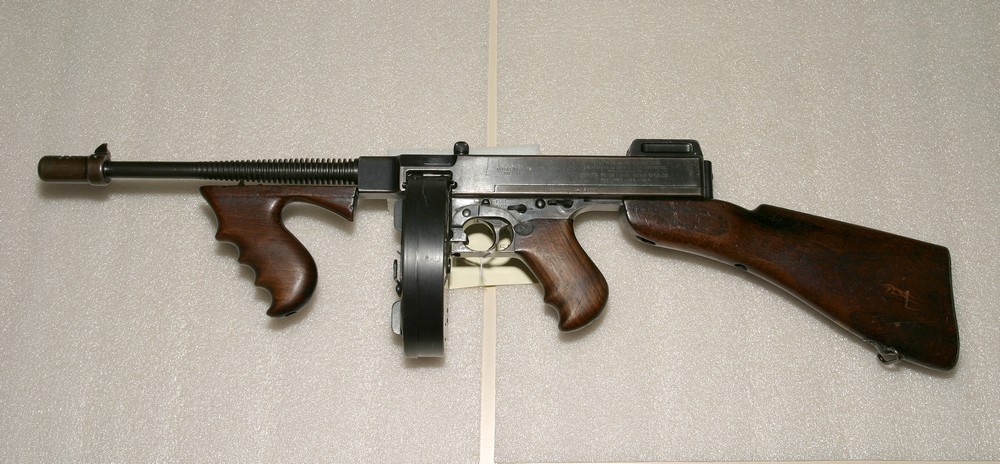
Federal statutes spell the legal term as one word: machinegun. Section 5845(b) generally covers a weapon that shoots, is designed to shoot, or can be readily restored to shoot automatically more than one shot, without manual reloading, by a single function of the trigger. The definition also reaches the frame or receiver and specified conversion parts or combinations of parts.
The NFA layer
Machineguns remain NFA firearms, and Public Law 119-21 did not reduce their $200 making or transfer tax to zero. NFA registration and tax rules therefore remain a distinct layer.
The Gun Control Act layer
The Firearm Owners' Protection Act of 1986 added 18 U.S.C. § 922(o). It generally prohibits transfer or possession of a machinegun, with exceptions for government authority and for machineguns lawfully possessed before May 19, 1986. Qualified licensee and government transactions have additional rules; the popular phrase “pre-86 transferable” is shorthand, not the whole statute.
That is why repeal of the NFA alone would not legalize newly made civilian machineguns. Section 922(o) would still exist in Title 18.
What Garland v. Cargill decided about bump stocks
In 2024, the Supreme Court held that a nonmechanical bump stock did not make a semiautomatic rifle a machinegun under § 5845(b), because the shooter still had to reengage the trigger for each shot and the weapon did not fire automatically by a single function of the trigger. The case was statutory interpretation—not a Second Amendment ruling—and it did not legalize actual machineguns.
How did short-barreled rifles become federally regulated?
1934: a tax law aimed at “gangster weapons”
Congress enacted the National Firearms Act on June 26, 1934, during a period of intense public concern over organized crime, bank robberies and sensational violence associated with machineguns and concealable weapons. ATF's official history says the Act's underlying purpose was to curtail, if not prohibit, transactions in weapons Congress associated with the gangland crime problem.
Congress structured the law as a tax measure. The original $200 transfer tax was deliberately severe. In 1934 it could equal the price of a machinegun and dwarfed the price of many ordinary firearms. Registration, paperwork and criminal penalties supported collection of the tax.
Why were SBRs included if handguns were removed?
Early versions of the proposal included pistols and revolvers, but the enacted statute expressly excluded ordinary pistols and revolvers from the concealable AOW category. Short-barreled rifles and shotguns remained. A common historical explanation is that Congress kept those clauses to prevent people from avoiding contemplated handgun restrictions by cutting down shoulder-fired guns.
That explanation is plausible and consistent with the structure of early drafts, but it should be labeled as an historical inference, not quoted as an undisputed sentence from Congress. The surviving 1934 discussion of SBRs was far thinner than modern internet summaries often imply. The final statute itself is certain: rifles and shotguns with barrels under 18 inches were covered, while ordinary pistols and revolvers were excluded.
1960: the rifle threshold becomes 16 inches
Public Law 86-478, enacted June 1, 1960, reduced the federal minimum rifle barrel reference from 18 inches to 16 inches and added the 26-inch overall-length concept for weapons made from rifles and shotguns. Modern explanations often connect the change to government-surplus M1 Carbines with barrels shorter than 18 inches. Whatever weight one gives that legislative-history account, the enacted numerical change is clear.
1968: the Gun Control Act rebuilds the NFA
In Haynes v. United States, the Supreme Court held that the old registration system violated the privilege against self-incrimination as applied to a person illegally possessing an unregistered NFA firearm. Congress answered through Title II of the Gun Control Act of 1968. It removed the old possessor-registration mechanism, protected application information from certain criminal use and expanded NFA definitions.
The GCA also created a separate Title 18 system governing firearms commerce and transfers. That second layer is why an SBR question cannot be answered by reading the NFA alone.
1986: machineguns get an independent possession restriction
The Firearm Owners' Protection Act amended federal law in several ways. Most important here, § 922(o) created the May 19, 1986 machinegun cutoff. It is a GCA restriction, independent of the NFA tax-and-registration structure.
2023–2026: braces, zero-dollar taxes and new litigation
ATF's 2023 stabilizing-brace rule tried to clarify when a brace-equipped firearm is designed and intended to be shoulder-fired. Courts repeatedly blocked or vacated the rule, and ATF proposed removing its added criteria in May 2026.
Separately, Congress reduced NFA making and transfer taxes to $0 for SBRs, SBSs, silencers and AOWs effective January 1, 2026. The August 2026 Silencer Shop Foundation decision then held specified supporting regulations unconstitutional for untaxed firearms and enjoined their enforcement for the covered parties. The court did not decide the Second Amendment claim and did not issue a universal injunction.
The court cases that shaped SBR and machinegun law

Sonzinsky v. United States (1937)
The Court upheld the NFA's annual dealer tax as a valid exercise of the taxing power and refused to look behind a tax's regulatory motive when it operated as a tax on its face.
United States v. Miller (1939)
Miller concerned an unregistered short-barreled shotgun, not an SBR. The Court reversed dismissal because the record did not show that the particular shotgun had a reasonable relationship to preservation or efficiency of a well-regulated militia.
| Case | What the Court held | What people often get wrong |
|---|---|---|
| Haynes (1968) | The old possessor-registration requirement created a real and appreciable self-incrimination hazard. | It did not permanently erase the NFA; Congress rebuilt the system later that year. |
| Thompson/Center Arms (1992) | An unassembled pistol/carbine kit with lawful configurations did not automatically constitute an SBR under an ambiguous statute; the plurality applied lenity. | It did not hold that parts can never create NFA liability or that unlawful assembly is permitted. |
| Staples (1994) | For the charged machinegun offense, the government had to prove the defendant knew the characteristics that made the rifle fire automatically. | The government did not have to prove he knew the NFA registration law itself. |
| Cargill (2024) | A nonmechanical bump stock did not satisfy the statutory machinegun definition because each shot required reengagement of the trigger. | It was not a Second Amendment decision and did not invalidate § 922(o). |
| Silencer Shop Foundation (2026) | An N.D. Texas court held challenged NFA provisions unsupported by the taxing power after the relevant tax became $0 and entered a party-specific injunction. | It was not a nationwide order, did not decide the Second Amendment claim and did not repeal independent GCA or state law. |
Timeline: SBRs, AOWs and machinegun law from 1934 to today
Common SBR, AOW and machinegun myths—corrected
Frequently asked questions
What barrel length makes a rifle an SBR?
A rifle with a barrel under 16 inches is an SBR under the NFA. A weapon made from a rifle also falls within the definition if, as modified, it has a barrel under 16 inches or an overall length under 26 inches.
Is an AR pistol an SBR?
Not automatically. A firearm originally designed and configured as a pistol, without shoulder-fired rifle design, can be a pistol despite a barrel under 16 inches. A shoulder stock, objective design, original rifle history or another configuration change can alter the result.
Can I put a vertical foregrip on an AR pistol?
Do not assume that you can. ATF has long treated adding a vertical foregrip to a conventional concealable handgun as making an AOW. Larger firearms that are not concealable can present a different classification, but measurement, original design and state law still matter. Have the exact firearm classified before attaching the grip.
Does an angled foregrip make a pistol an AOW?
ATF's published 2006 guidance specifically addresses a vertical foregrip. An angled device is not automatically identical, but labels are not controlling. Actual design and use determine whether it is a second vertical handgrip.
Can a pistol become a rifle and then become a pistol again?
ATF Ruling 2011-4 says a firearm originally configured as a pistol may be assembled as a non-NFA rifle with a barrel of at least 16 inches and overall length of at least 26 inches, then returned to a pistol configuration. It does not authorize assembling an SBR configuration.
What does “rifle first” mean?
It refers to a firearm originally assembled or produced only as a rifle. Shortening that firearm can create a weapon made from a rifle, even if the final shape resembles a pistol. Original manufacturing records can therefore matter.
Did the NFA tax become zero in 2026?
Yes. Effective January 1, 2026, federal NFA making and transfer tax rates became $0 for SBRs, SBSs, silencers and AOWs. Machineguns and destructive devices retained $200 rates. The tax change did not by itself erase every NFA, GCA or state-law requirement.
Did a court strike down the NFA in August 2026?
An N.D. Texas court held specified NFA provisions unconstitutional for untaxed firearms and entered a permanent injunction for the plaintiffs and closely covered members or customers. It did not issue a nationwide injunction, decide the Second Amendment claim or erase separate GCA and state law.
If the NFA is repealed, can I buy an SBR like an ordinary rifle?
Not necessarily. The Gun Control Act separately defines SBRs and restricts dealer transfers and interstate transport. The result would depend on the exact repeal language, any GCA amendment and state law.
Are machineguns and SBRs governed by the same law?
Both are NFA firearm categories and both appear in GCA provisions, but machineguns also face the independent § 922(o) May 19, 1986 restriction. Machineguns kept a $200 NFA tax in 2026; SBR taxes became $0.
Is this article a substitute for a firearm classification?
No. It explains the framework. A final classification can depend on the exact firearm, factory history, measurements, components, controlling court order and state law. Obtain transaction-specific guidance when the facts are close.
Primary laws, rulings and court sources
This article favors statutes, official agency material and judicial opinions over unsourced summaries. Accessed and reviewed August 28, 2026.
- 26 U.S.C. § 5845—NFA definitions of firearm, rifle, machinegun and AOW.
- 18 U.S.C. § 921—GCA definitions.
- 18 U.S.C. § 922—unlawful acts, including §§ 922(a)(4), (b)(4) and (o).
- National Firearms Act of 1934, 48 Stat. 1236.
- Public Law 86-478, 74 Stat. 149—the 1960 barrel- and overall-length amendments.
- ATF—National Firearms Act history.
- ATF NFA Handbook, Chapter 2—definitions and federal measurement procedures.
- ATF Ruling 2011-4—pistol-to-rifle configurations and parts kits.
- ATF—Adding a Vertical Fore Grip to a Handgun (May 4, 2006). Historical fee figures in this letter are no longer current.
- ATF 2026 proposed rule—removing stabilizing-brace criteria.
- Public Law 119-21, § 70436—2026 NFA tax-rate changes.
- ATF final rule—Changes to National Firearms Act Tax Remittance Provisions, 91 Fed. Reg. 25112.
- Sonzinsky v. United States, 300 U.S. 506 (1937).
- United States v. Miller, 307 U.S. 174 (1939).
- Haynes v. United States, 390 U.S. 85 (1968).
- United States v. Thompson/Center Arms Co., 504 U.S. 505 (1992).
- Staples v. United States, 511 U.S. 600 (1994).
- Garland v. Cargill, 602 U.S. 406 (2024).
- Silencer Shop Foundation v. ATF, memorandum opinion and order (N.D. Tex. Aug. 5, 2026).
Continue in the Texas Guns Education Hub
Build the full picture with our live NFA update, silencer history and hands-on ownership guides.
2026 NFA Ruling Update History of Firearm Silencers Suppressor Mounting Guide Education CenterEducational and legal disclaimer: This article provides a general historical and legal overview, not individualized legal advice or a final classification of any specific firearm. Federal classifications can turn on design details, original manufacture, exact measurements, components and controlling court orders. State and local laws may be more restrictive. Do not make, reconfigure, transfer or transport a firearm based only on an internet article. Confirm the current rule with ATF guidance, a qualified firearms attorney and the laws of every relevant jurisdiction.
Information